Guides
Collecting agency commission on influencer deals: payment schedule and clawbacks
Collecting agency commission on influencer deals: how to track payment schedules, spot clawback risk, and decide when collection numbers are enough.
What to take away
- Commission collection rate is the share of earned commissions actually received within the agreed payment window.
- A collection rate below 85 percent over a rolling 90-day period is a threshold for reviewing enforcement steps.
- The metric does not show whether a deal was profitable after staff time and legal review.
- Stop daily tracking when the rate stays above 90 percent for two quarters and clawback requests stay rare.
A commission is legally a fee paid to an agent for services, often as a percentage of a transaction. For US influencer talent agencies, the agent collects from brands and then pays the creator. Contract terms set the commission split and the trigger for invoicing, so review contract terms before a payment dispute begins. In practice, collection quality depends on net terms, brand finance approval, and clawback clauses.
The metric that matters
Commission collection rate is the number you should track. It equals earned commissions actually received within the expected window divided by earned commissions billed in that period, expressed as a percentage. Calculate it monthly and on a rolling 90-day basis. This metric captures the gap between what you bill and what actually lands in the agency account.
Cornell Law School defines commission as a fee paid to an agent for services, often as a percentage of a transaction, which supports the legal basis for collecting agency commission on influencer deals. Common payment terms in influencer marketing include flat fees and commissions, with net terms that shape when agencies can invoice, according to typical payment structures. The FTC endorsement guides affect deal structure and disclosure, but not the collection window itself.
Reading payment schedules and clawbacks
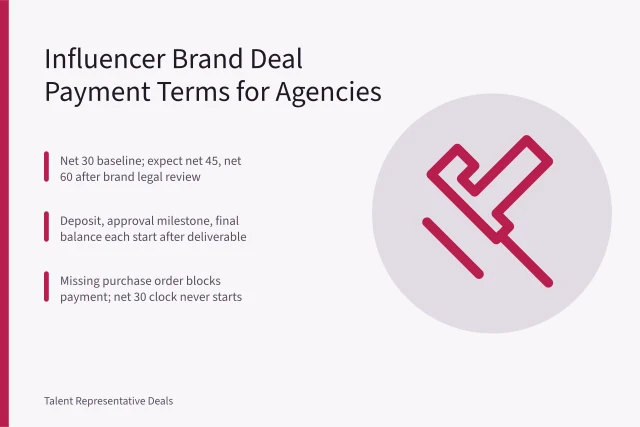
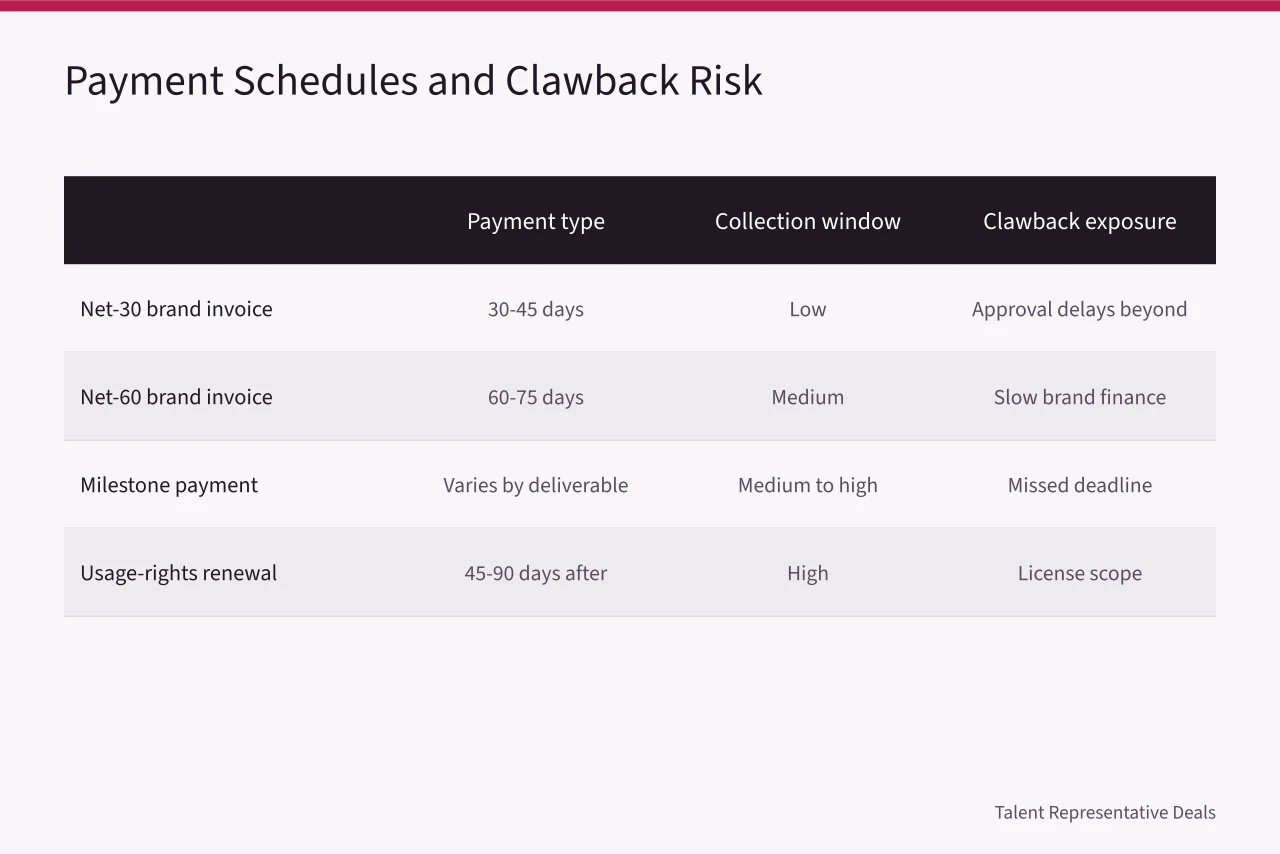
A talent agent commission schedule controls when the agency can invoice brand deals. The influencer agent commission split is usually set in the representation contract, but it does not by itself determine collection risk. Brands often pay net-30 or net-60 after invoice receipt. Some milestone deals pay only after specific deliverables are approved.
FTC disclosure requirements do not delay payment, but they can delay campaign approval, which then pushes the invoice date.
| Payment type | Collection window | Clawback exposure | What to watch |
|---|---|---|---|
| Net-30 brand invoice | 30-45 days | Low | Payment approval delays beyond 45 days |
| Net-60 brand invoice | 60-75 days | Medium | Slow brand finance cycles |
| Milestone payment | Varies by deliverable | Medium to high | Missed deadline disputes |
| Usage-rights renewal | 45-90 days after renewal | High | License scope disagreements |
Clawbacks are the part nobody mentions until after a deal looks closed. A clawback is a brand demand that the agency return commission because a post fails, a deadline slips, or a usage right is disputed. Track clawback requests separately from late payments. A clawback rate above five percent of collected commission in a quarter is an early sign that contract language or creator selection needs review.
What the number cannot tell you
Commission collection rate has limits. It tells you whether promised commission arrived on time. It cannot tell you whether a commission was worth the staff time, legal review, and email follow-up used to collect it. A 95 percent collection rate can mask a dozen small deals that consumed more hours than a single large easy payment.
The metric also cannot tell you whether a late-paying brand is a strategic client worth keeping. Some brands pay late but renew often. Collection rate alone would push you to treat them the same as a one-off slow payer.
Attribution and its limits
A low collection rate may come from a brand's finance department, not the agency billing process. Attribution is limited because one delayed invoice from a major brand can distort a small agency's quarterly rate. If you change your follow-up cadence and the rate does not improve, the cause may sit outside your control.
Payment timing also depends on state registration. Talent agency license requirements by state can affect whether the agency may legally demand commission from a brand or creator in certain jurisdictions. A missing license may convert a collectible receivable into an uncollectible one.
When the agency pays talent after brand funds arrive, IRS Publication 15 rules apply to any employee payments, not to independent creator payouts. Misclassifying that payment flow can create tax withholding problems even when commission collection looks healthy.
When to stop measuring and decide
Set a working threshold. If commission collection rate falls below 85 percent over a rolling 90-day period, stop routine follow-ups and start dispute review, legal notice, or renegotiation. If the rate stays above 90 percent for two full quarters and clawback requests stay below five percent of collected commissions, move to monthly review.
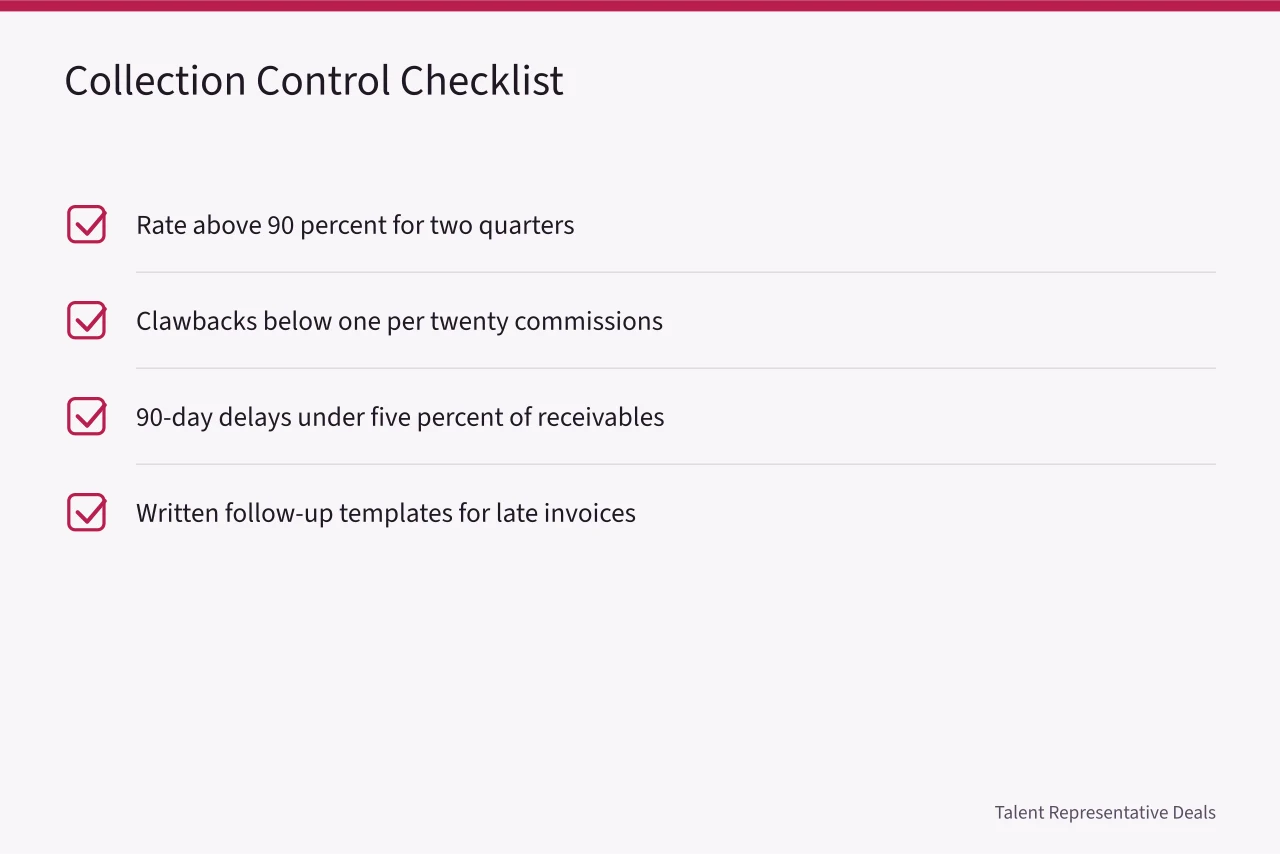
Use this checklist before you decide that collection is under control.
- Commission collection rate has stayed above 90 percent for two full quarters.
- Clawback requests are below one per twenty collected commissions.
- Payment delays over 90 days account for less than five percent of outstanding receivables.
- The agency has written follow-up templates for the rare late invoice.
Slow collection can contribute to client churn. Agencies that understand talent agency clients quietly churn often tighten payment clauses before the collection metric turns red.
Common questions
When should an agency invoice a brand deal? Invoice as soon as the contract's payment trigger occurs, usually when the creator delivers the approved content or the campaign goes live. The invoice should reference the deal number, deliverable, and agreed net terms.
What is a clawback in influencer commission collection? A clawback is a demand by a brand to return commission after a deal is cancelled, a deliverable is rejected, or a usage right is disputed. Track clawback requests separately because they can erase collected revenue.
How is commission collection rate different from profit? Collection rate measures whether promised commission arrives within terms. It does not subtract agency labor, software, or legal costs, so a high rate can still mean an unprofitable deal.
When should an agency stop measuring daily? Stop daily tracking after two quarters above 90 percent collection and clawback frequency below five percent of collected commissions. Switch to monthly review.