Guides
How do influencer brand deal payment terms actually work for agencies?
Influencer brand deal payment terms often mean net 30 and split deposits. US agencies must check SAG-AFTRA and non-union timing rules before invoicing.
What to take away
- Net 30 is the common US baseline for influencer brand deals, but agencies should expect net 45, net 60, and longer after brand legal review.
- Payment schedules usually split into deposit, approval milestone, and final balance, and each stage starts only after a specific deliverable is accepted.
- SAG-AFTRA signatory deals carry union timelines and minimum payment rules; non-union deals leave payment dates to the agency's contract.
- Agencies that invoice before usage rights are cleared create the most common payment failure: an invoice that restarts its net 30 clock after every revision.
Stage by stage
In a standard non-union brand deal, payment moves through four gates: signed contract, content approval, invoice, and final settlement to talent.
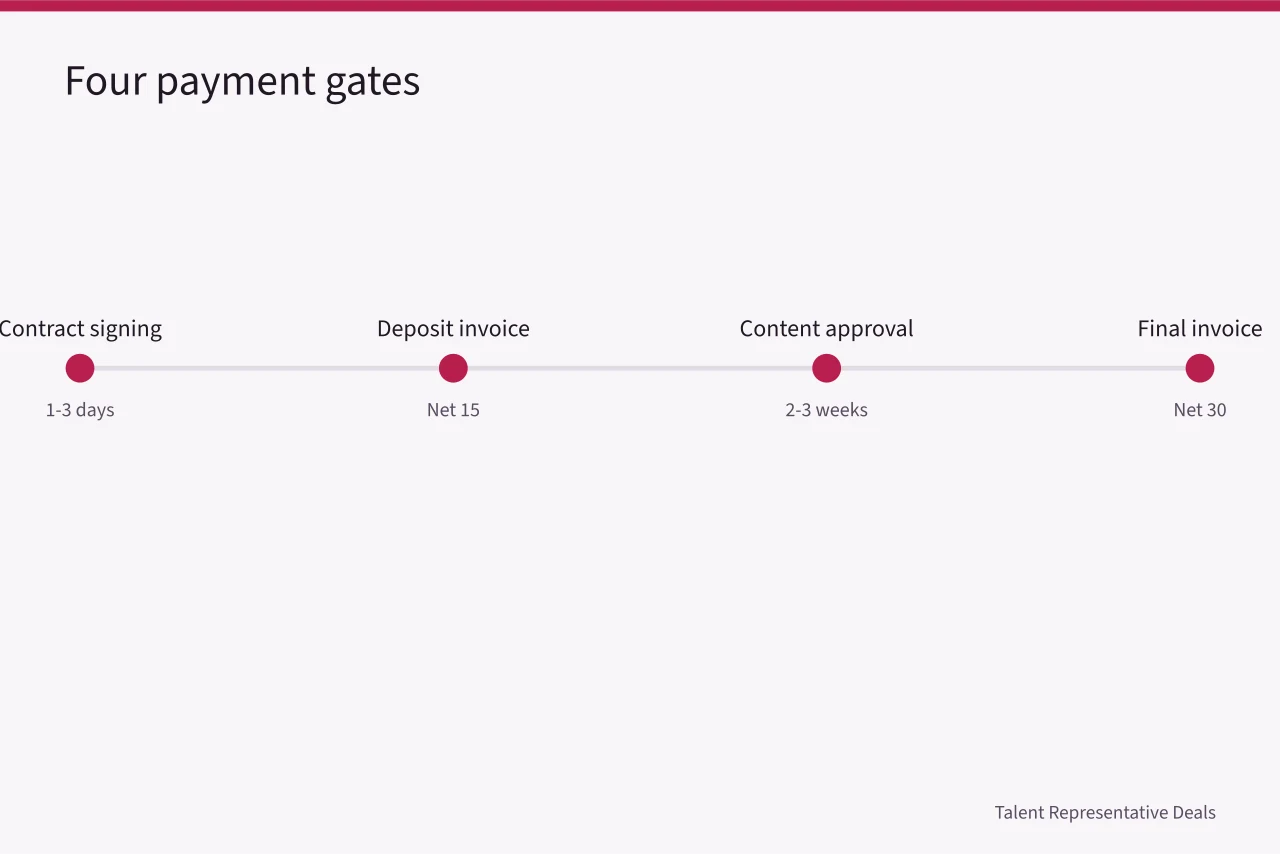
| Stage | Typical duration | What must exist before it |
|---|---|---|
| Contract signing and W-9 collection | 1 to 3 business days | Signed scope, usage terms, and tax form from talent or agency |
| Deposit invoice | Net 15 from signing | Purchase order or brand approval of the fee |
| Content creation and brand approval | 2 to 3 weeks after kickoff | Approved brief, product, and disclosure language |
| Final invoice and payment | Net 30 after final approval | Brand's written acceptance of the posted content and usage rights |
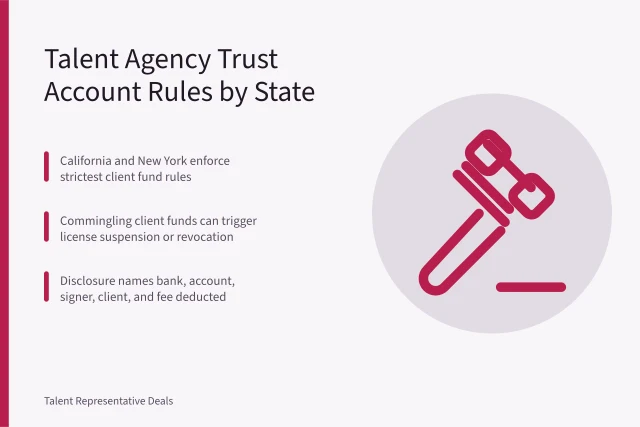
| Commission settlement to talent | 7 to 10 business days after funds clear | Agency trust account or payment processor verification |
The net 30 clock does not start when the post goes live. It starts when the brand signs off on usage rights and the agency issues a correct invoice.
The contract should also state which party owns usage rights, because contract terms missing here often reset the payment clock.
What has to exist before what
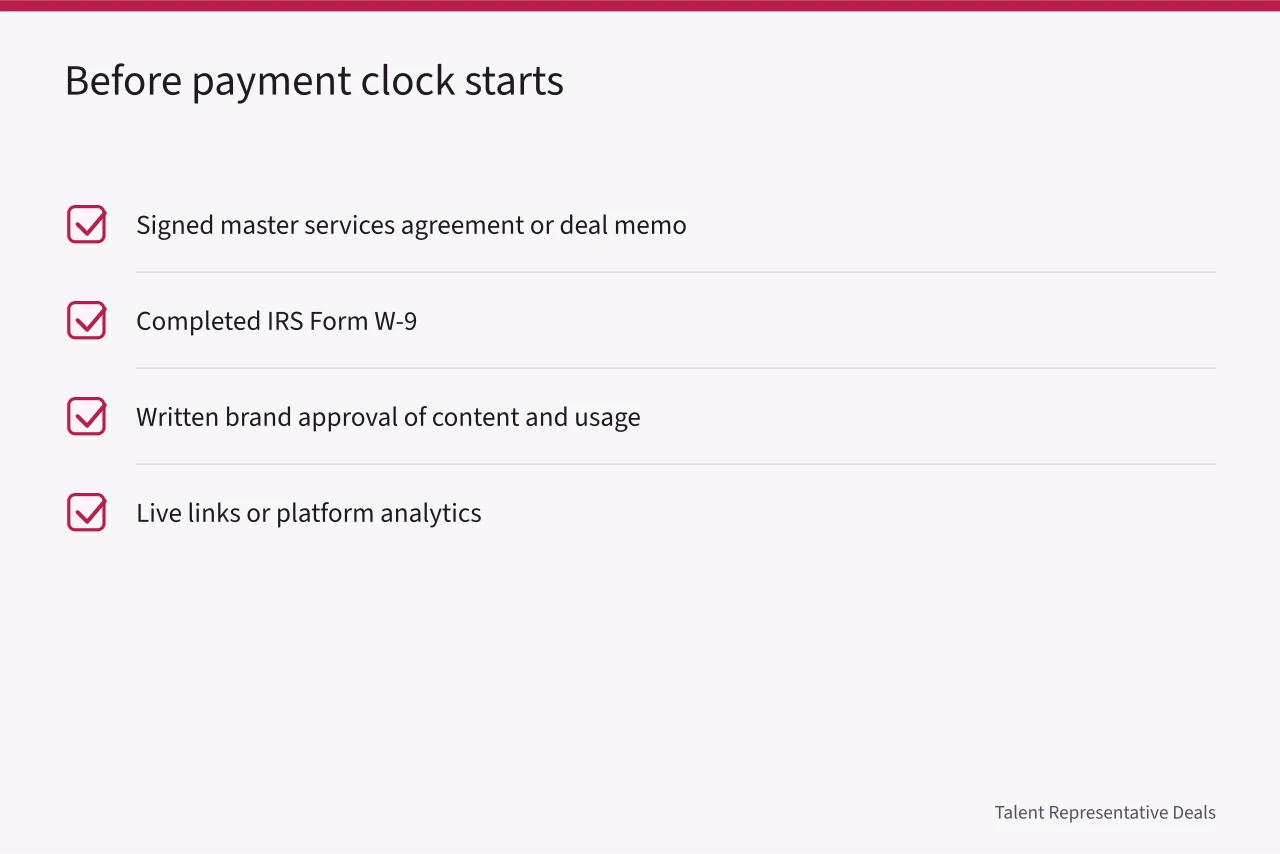
- A signed master services agreement or deal memo. Without it, no enforceable payment date exists, and the agency is the one exposed.
- A completed IRS Form W-9 from the talent or the agency, depending on who invoices the brand. Missing tax identification blocks payment at the brand's accounts payable desk.
- Written brand approval of the content and usage rights. This is the single most common blocker because brands will not start a net 30 clock until their legal team signs off on usage.
- Live links or platform analytics proving the post went live. If the post is removed or edited, the final payment date can restart.
The FTC endorsement guides require a visible material connection on every paid post, and a missing disclosure can justify a brand withholding final payment.
Where it stalls
The most common failure mode is a purchase-order-less invoice. Cause: the agency issues a final invoice before the brand's finance team has entered a purchase order, so the invoice sits outside the payment system and the net 30 clock never starts.
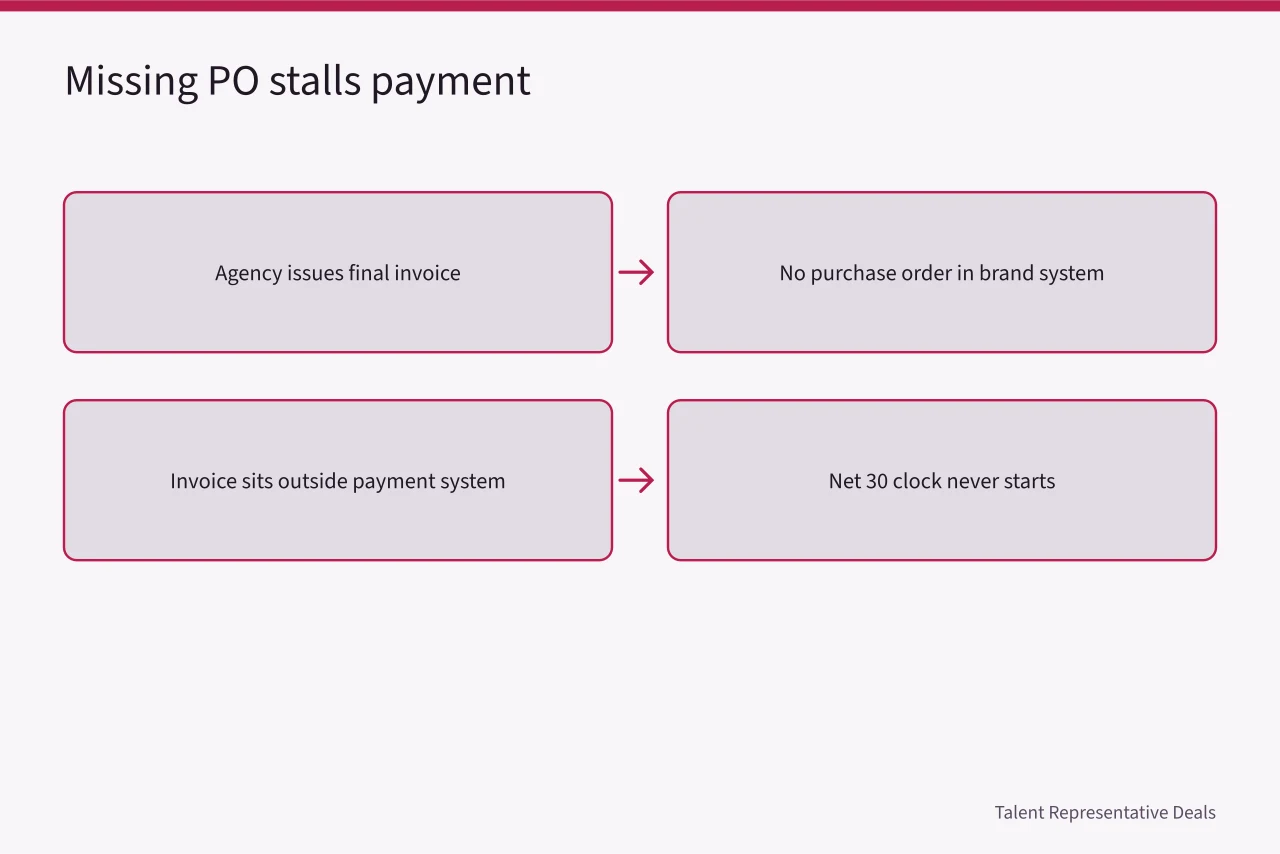
Treat a missing purchase order as a payment blocker, not a clerical afterthought. Ask for the PO number before you accept the signed contract.
SAG-AFTRA signatory deals often require payment within a set number of business days after the session or final acceptance, and the union can pursue a claim if the agency or brand misses that date. Non-union deals have no such backstop, so the agency must build late fees and stop-work clauses into the paper.
The FTC's Disclosures 101 guidance makes clear that a paid brand relationship must be disclosed, and a brand can cite a missing disclosure as a reason not to approve the final invoice.
Another stall happens when a creator edits or deletes a post. The brand can then treat the usage approval as conditional and hold the final invoice while a revised approval moves through legal.
For agencies with creators in licensed states, unpaid invoices can also stall because the agency's license lapsed. Use a US talent agency compliance calendar to catch renewal dates before a brand challenges the contract.
What to do while waiting
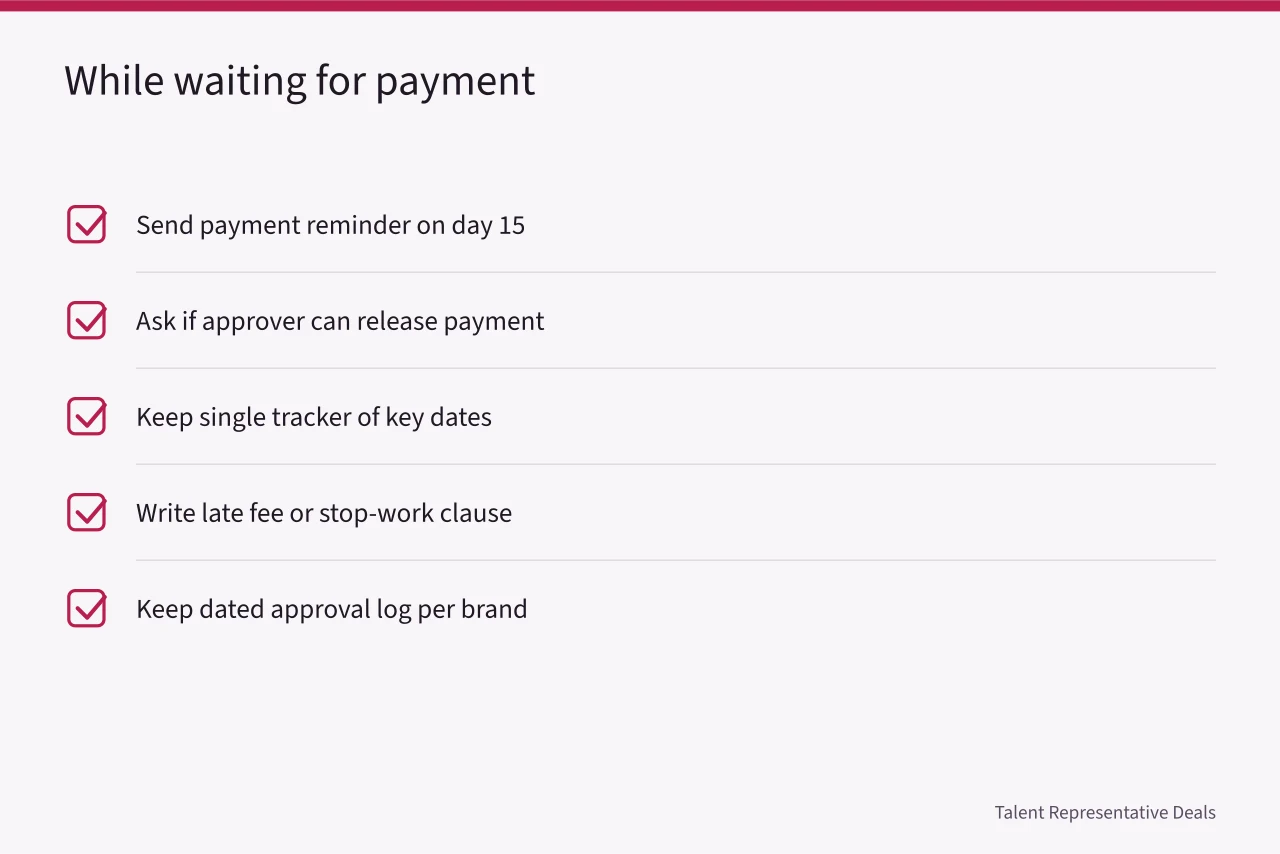
- Send a payment reminder on day 15 of the net 30 term, with the invoice number and the PO number in the subject line.
- Ask the brand whether the final approval email came from the person who can release payment, not just the campaign manager.
- Keep a single tracker of deposit, approval, and final invoice dates so no net 30 clock is guessed.
- For non-union deals, write a late fee or stop-work clause into the next contract before you need it.
- Keep a dated approval log for each brand; when a brand changes reviewers, the approval date resets and so does the payment clock.
When the agency holds talent payments, keep backup withholding in mind: IRS Publication 15 walks through the rules for missing W-9s.
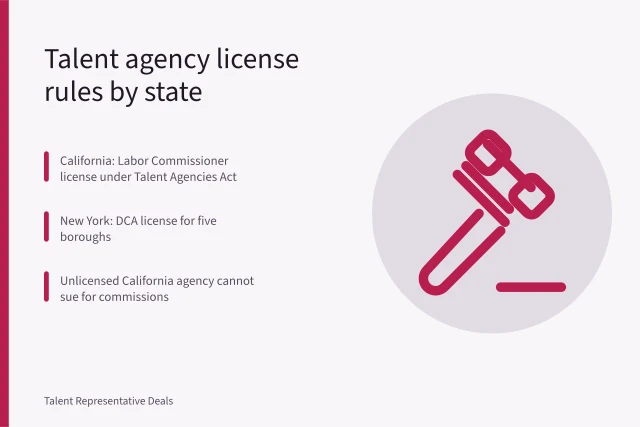
Before you sign a brand deal for a creator in a state that requires a talent agency license, check talent agency license requirements because payment terms can be void if the agency is not licensed.
Common questions
Does SAG-AFTRA change net 30 terms? SAG-AFTRA signatory deals can shorten or override net 30 by requiring payment within a set number of business days after the session or final acceptance. Non-union deals have no such override, so net 30 remains a contract term.
Can a brand pay the agency before the talent is paid? Yes, and that is common. The agency should keep the talent's share separate until the brand's funds clear, then settle the talent within 7 to 10 business days.
What if the brand never gives a purchase order? Treat it as a blocker. Without a PO, the invoice may never enter the payment system, and the agency is left chasing accounts payable instead of enforcing a payment date.
When does the final net 30 clock start? It starts after the brand approves final usage rights and the agency invoices. If usage rights are not approved, the clock has not started.