Guides
Talent agency errors and omissions insurance: what a policy must include
Talent agency errors and omissions insurance is a professional liability policy. Learn what it must include, what to ask brokers, and answers that end the call.
What to take away
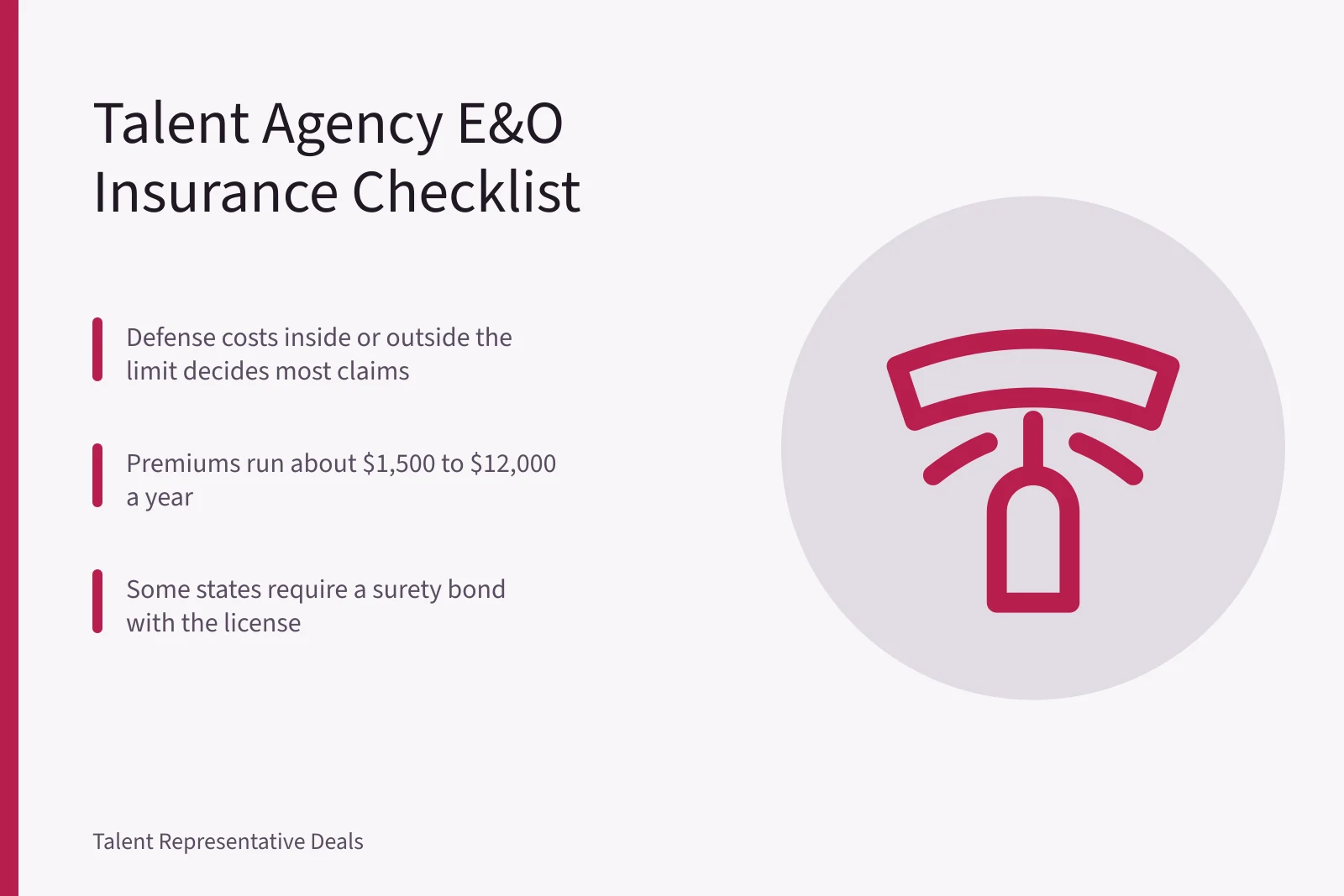
- E&O for a talent agency is professional liability: it answers claims that your advice, contracts or omissions cost a client or a brand money. General liability does not.
- The policy must name your entity, cover prior acts, and state defense costs inside or outside the limit. Those three points decide most claims.
- Premiums for a small US agency commonly run from about $1,500 to $12,000 a year. Treat that as an illustrative range, not a quote.
- Several states require agencies to carry a bond or proof of coverage before a license issues. Check your own state before you sign a brand contract.
- Ask every broker the same five questions below. Two answers should end the conversation.
Scopes that are actually different jobs
Four products get quoted under the same phone call, and they do not do the same work.
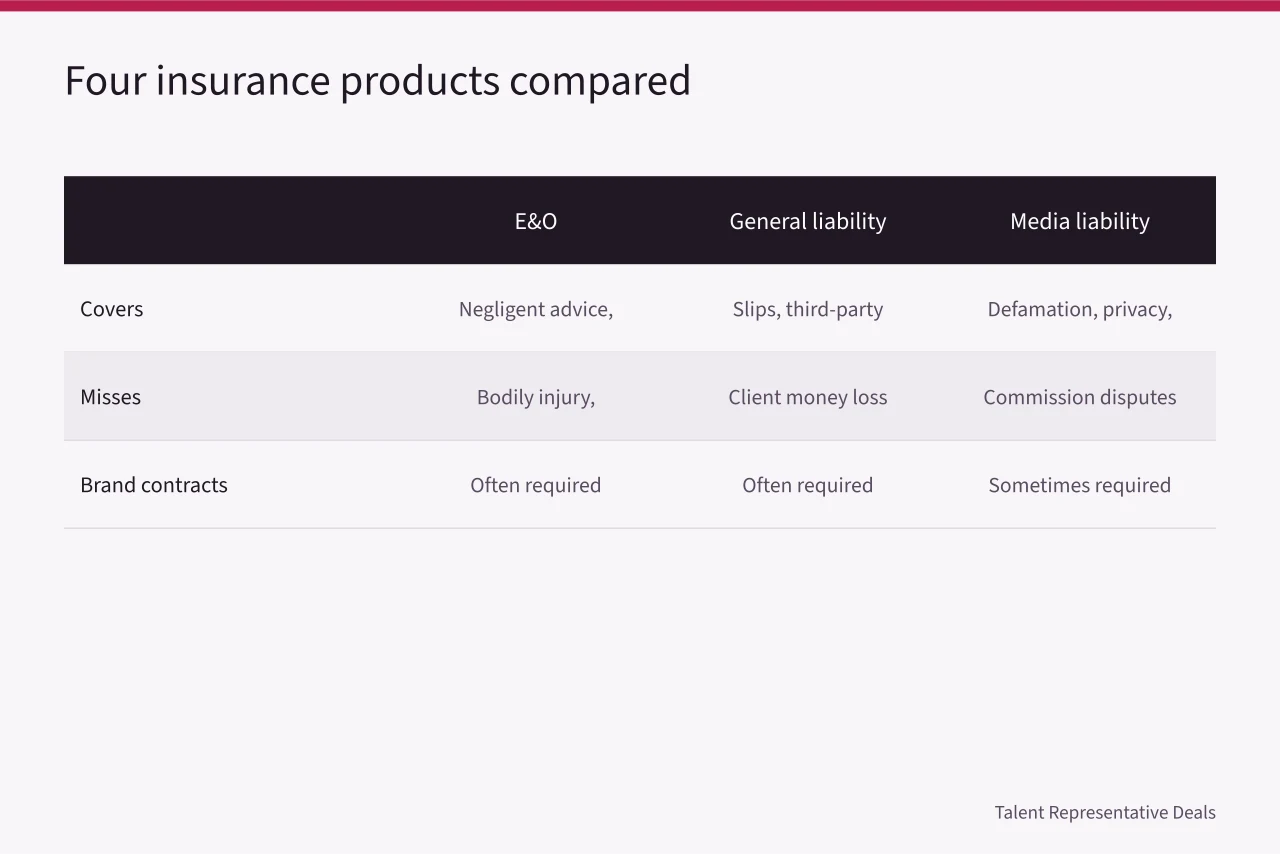
| Product | What it covers | What it misses |
|---|---|---|
| Errors and omissions (professional liability) | Negligent advice, contract drafting, missed deadlines, failure to disclose | Bodily injury, property damage |
| Commercial general liability | Slips, damage at a shoot, third-party injury | Claims about money your client lost |
| Media liability | Defamation, invasion of privacy, some IP claims in content | Commission disputes and booking errors |
| Cyber liability | Data breach, ransomware, notification costs | Anything that is not data |
A brand contract that demands insurance usually wants the first two, and sometimes the third. Read the certificate requirement line by line. If the contract says professional liability, a general liability certificate will not satisfy it.
Questions to ask
Use these verbatim. Ask every broker the same set and compare the answers side by side.
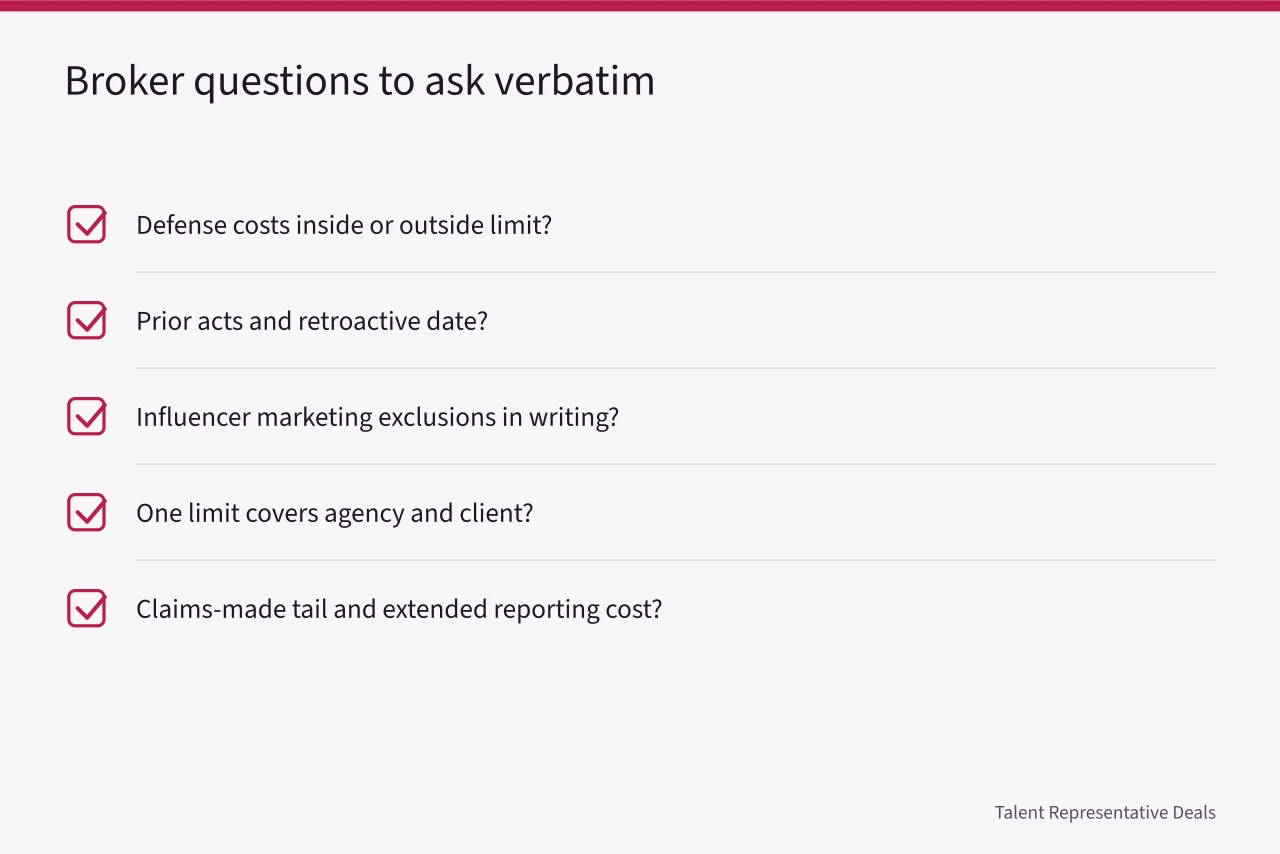
"Is defense costs inside or outside the limit of liability?"
"Does the policy cover prior acts, and what is the retroactive date?"
"Which exclusions apply to influencer marketing, and will you send them in writing?"
"If a brand sues my client and names my agency, does one limit cover both of us?"
"What is the claims-made tail, and what does an extended reporting period cost?"
Write the answers down. A broker who will not put exclusions in writing is selling a certificate, not a policy.
Evidence to request
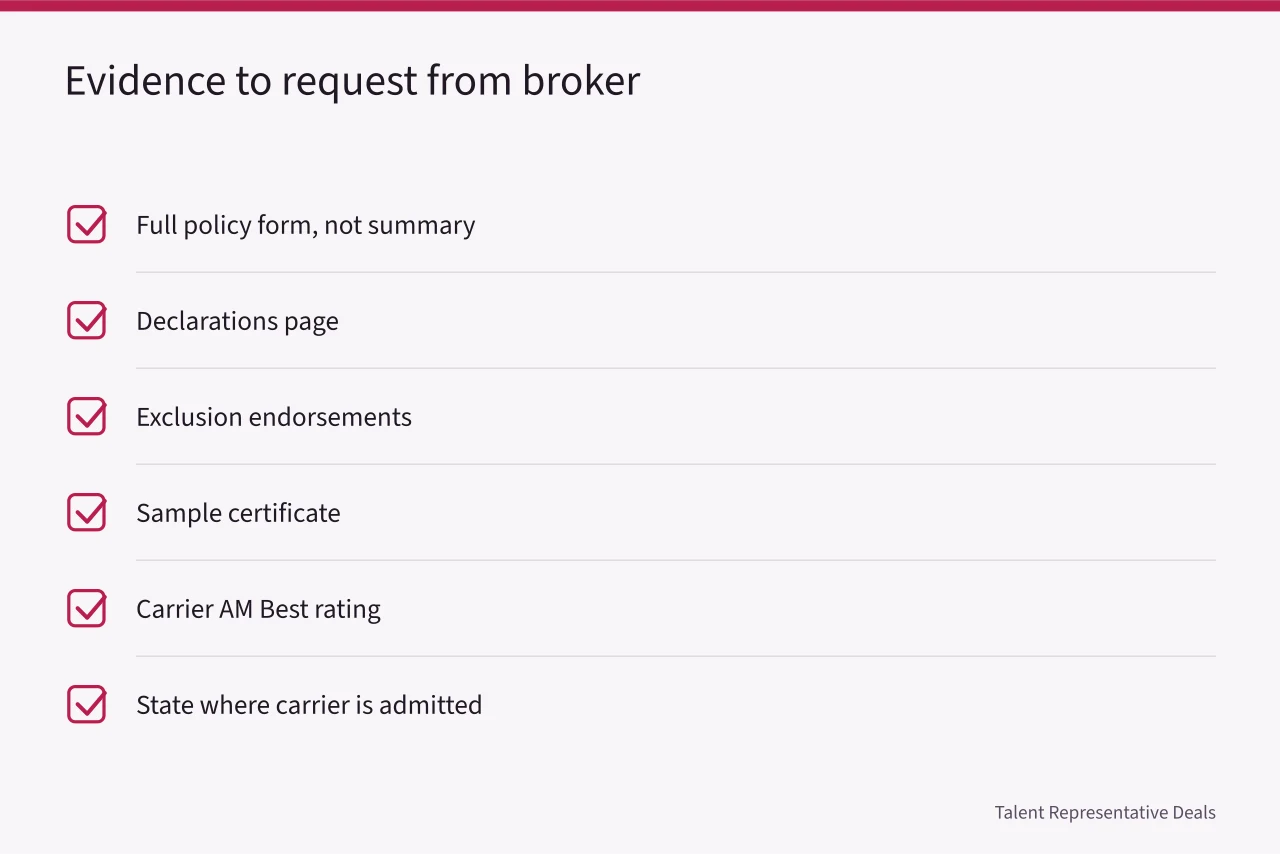
Ask for the full policy form, not a summary. Ask for the declarations page, the exclusion endorsements, and a sample certificate. Ask for the carrier's AM Best rating and the state where the carrier is admitted.
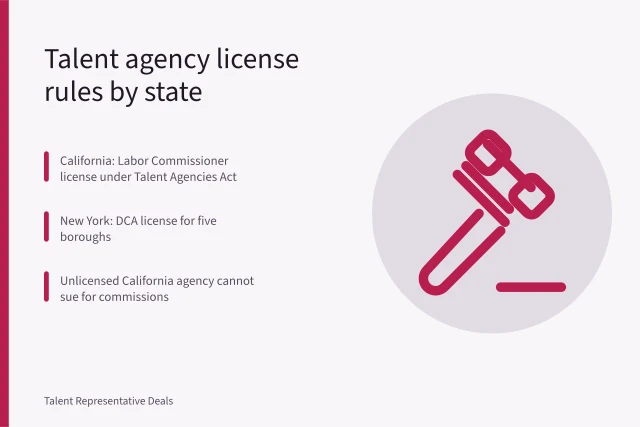
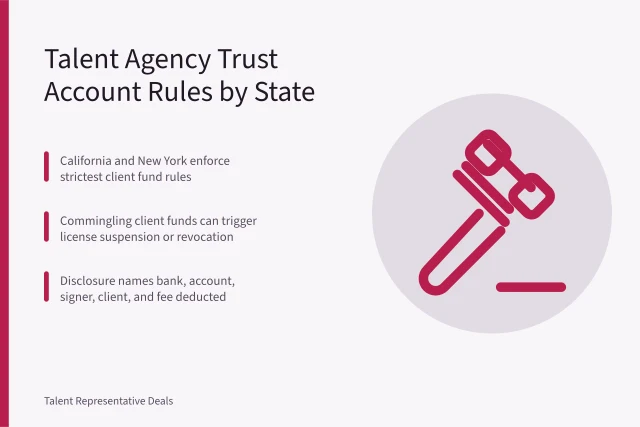
For a licensed agency, the state filing matters. Some states require a surety bond or proof of coverage with the license application, and the talent agency license requirements by state page lists what each state asks for before you sign. If your agency handles client money, read the talent agency trust account requirements because a trust account violation can trigger a claim your E&O policy may exclude.
Answers that should end the conversation
Three responses mean you stop and find another broker.
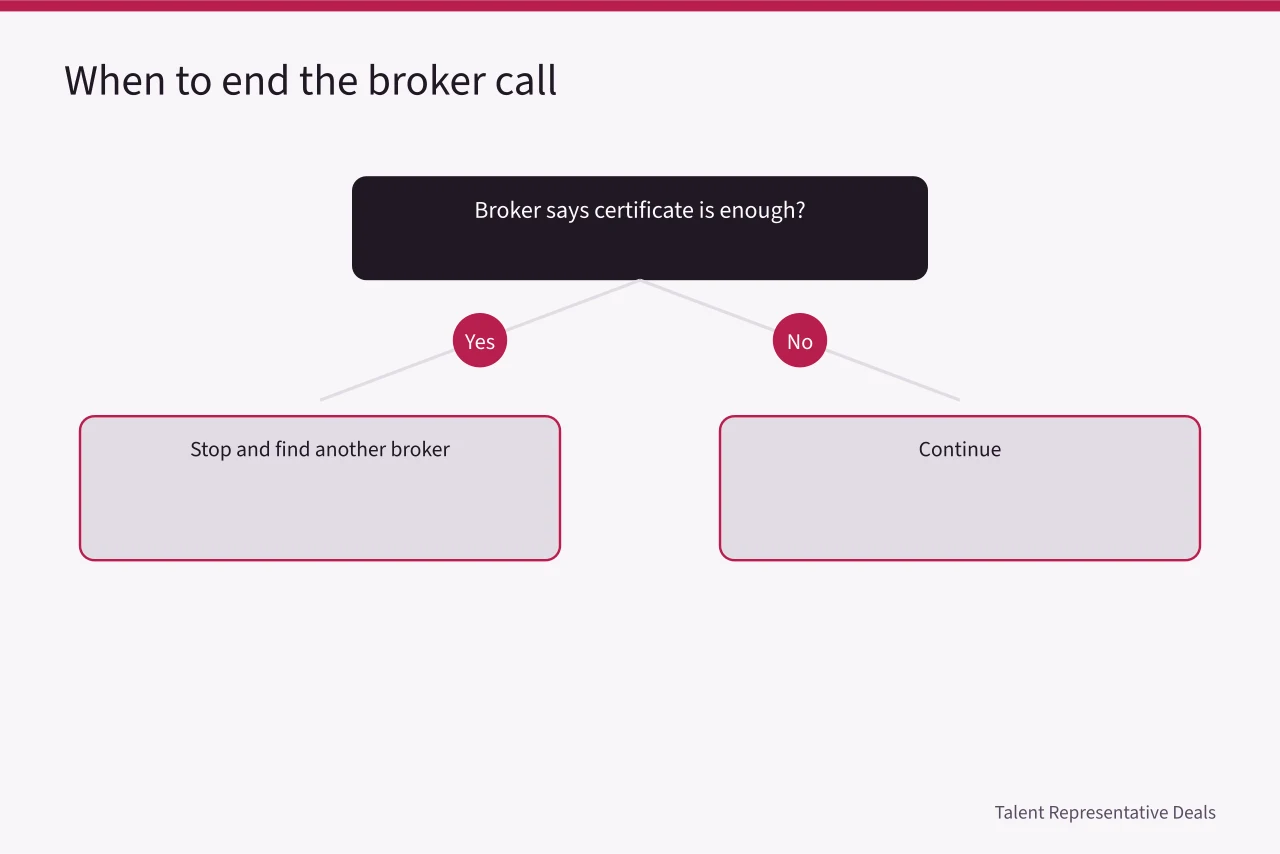
"The certificate is enough, you do not need the form." A certificate proves coverage exists on one date. It says nothing about exclusions.
"We can backdate the retroactive date after a claim." That is not how claims-made policies work, and asking for it in writing ends the relationship.
"You are covered for everything." No policy says that. A broker who will not name exclusions has not read the form.
A fourth answer is a yellow flag rather than a stop: "We will sort the state filing later." If your state requires proof of coverage with the license, later is too late.
A certificate is a snapshot. The policy form is the contract. Buy the contract.
What the agreement must say
Your engagement letter with talent should state who carries insurance, at what limit, and who pays the deductible. If a brand requires the agency to be named as an additional insured, the policy must allow it.
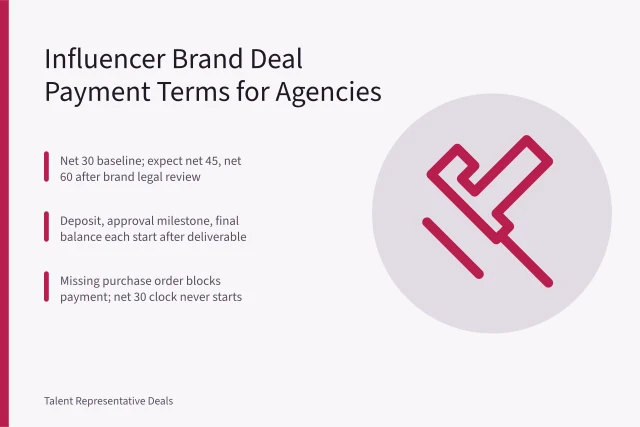
Check the commission clause against the policy. A dispute over how influencer brand deal payment terms actually work for agencies can become a professional liability claim if a client says you misstated a payment date. The same is true of usage rights: how to price influencer brand deal usage rights for an agency affects what you promise a brand, and a promise you cannot keep is a claim.
Ask the carrier whether independent contractors are covered. The IRS test for independent contractor status decides whether a creator on your roster is an employee or a contractor, and that answer changes who the policy must name.
Example
A three-person agency in Texas signs a beverage brand deal worth $180,000. The brand contract requires $1 million in professional liability and names the agency as an additional insured. The agency carries a $1 million claims-made policy with defense costs inside the limit and a retroactive date two years back.
The creator misses a disclosure, and the FTC's Disclosures 101 for Social Media Influencers is the standard the brand cites. Defense costs of $140,000 come out of the same $1 million. The settlement fits, but the agency has less cover for the next claim. That is the difference between inside and outside the limit, and it is the single question most owners never ask.
Common questions
Does general liability cover a commission dispute? No. General liability covers injury and property damage. A commission dispute is a professional liability claim, which is why the E&O policy has to be in place before the deal is signed.
How much does a policy cost for a new agency? Small US agencies commonly see quotes from roughly $1,500 to $12,000 a year, depending on revenue, roster size and limits. That range is illustrative. Get three quotes and compare the exclusions, not the price.
Do I need coverage before I have a license? Some states ask for a bond or proof of coverage with the application. Start with the SBA guide to licenses and permits and confirm your state's filing sequence.
What happens if I let the policy lapse? A claims-made policy only responds to claims reported while it is active or during an extended reporting period. A lapse can leave an old deal uncovered, even if the work was done years earlier.